


What Is the Best Alarm Clock for Someone with Dementia?
The best alarm clock for dementia is one that is simple to read, easy to use and gentle to wake up to. Look for a large display that shows the full day and date, a clear spoken message in a familiar voice, big distinct buttons and a reliable power supply. No single clock suits everyone, so match the features to the person.
For someone living with dementia, a standard alarm clock can be confusing. A tiny display, an abbreviated day such as “TUE” or a harsh buzzer can add to disorientation rather than help. A clock built with memory loss in mind can make mornings calmer and routines easier to keep.
What should you look for in an alarm clock for dementia?
Here are the features that matter most.
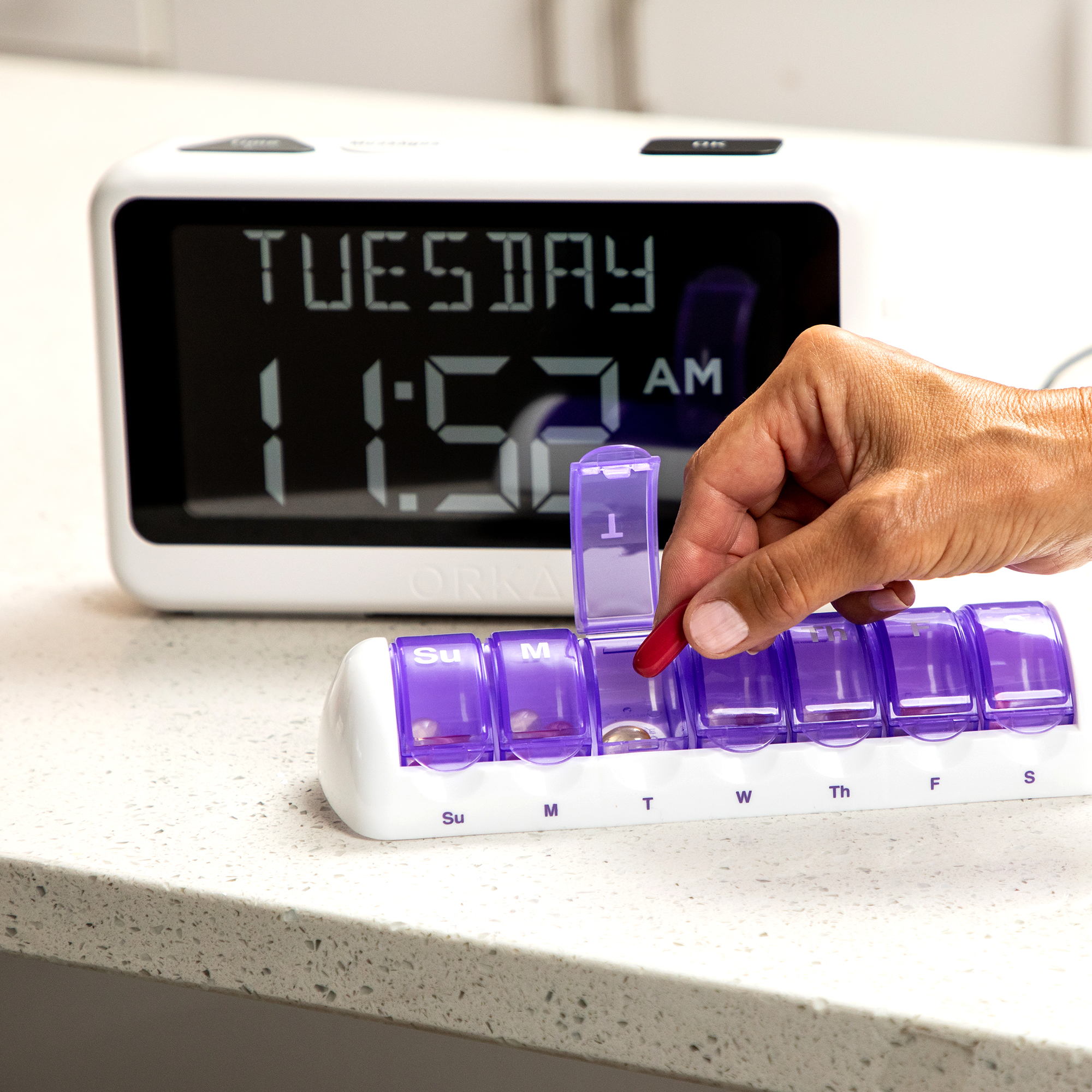
A large, clear display. The time should be easy to read from across the room. Check whether the day of the week is written out in full. Abbreviations like “MON” or “SAT” can be confusing, and knowing the day is one of the most helpful things a clock can tell someone.
A familiar voice instead of a buzzer. Some people respond better to a calm, familiar voice than to a beep. A clock that lets a family member record a personal message, such as “Good morning, Mum, it’s time for your tablets,” can feel more reassuring than a generic alarm.
Simple, distinct controls. Fewer buttons are better. Large buttons and sliders in different shapes and colours are easier to find and tell apart, whether someone has memory loss, low vision or both.
Enough alarms for the whole day. One alarm isn’t much use if reminders are needed for medications, meals, appointments and bedtime. Look for several alarms, each with its own message.
Volume you can adjust. Hearing varies from person to person. A volume control that’s easy to reach lets you set the level to suit the room and the listener.
Dependable power. A clock that loses its settings when the power flickers is frustrating for everyone. Look for a battery backup that keeps the settings saved.
Your own language. If English isn’t the person’s first language, a clock that speaks in the language they know best is a real advantage.
How does Talking Madi fit these needs?
Talking Madi is a voice alarm clock designed with these needs in mind. It has:
- A large display showing the time and the day of the week in full, with no abbreviations. It also speaks the day, date and time aloud.
- Up to 8 alarms, each with a personal voice message of up to 15 seconds, recorded by you.
- Large buttons and sliders in different shapes and colours, making each control easier to find.
- A volume control on the side, with sound up to 90 decibels.
- Plug-in power, with batteries that keep the settings saved if the power goes out.
- Six language settings: English (US), English (UK), Spanish, French, German and Italian.
Talking Madi is US$69.99 on Amazon. You can watch the how-to videos on this site to see how it’s set up.
Is a clock enough on its own?
No. A clock is one tool in a daily routine, not a replacement for care. Talking Madi is a reminder aid. It doesn’t replace medical advice, a pharmacist’s guidance or supervision from a carer, and it can’t make sure that medication is actually taken. If missed doses are a concern, talk to the person’s doctor or pharmacist about a system that suits them, such as a supervised pill organizer or help from a carer.
Tips for setting up an alarm clock for someone with dementia
- Place it where it can be seen easily. A bedside table or a kitchen counter in the person’s line of sight works well.
- Record the message together, if possible. Hearing it in a calm, friendly voice helps. Keep each message short and specific.
- Introduce it gradually. Set up one or two alarms first, then add more as the routine settles.
- Check it regularly. Make sure the time, date and language are correct, and that the volume suits the room.
- Keep the routine consistent. The same messages at the same times can help the day feel predictable.
Frequently asked questions
Can you record your own voice on the clock? Yes. With Talking Madi, you record a message for each alarm, up to 15 seconds long.
Does it show the full day of the week? Yes, with no abbreviations.
Is it easy to set up? It has large controls in different shapes and colours, and the how-to videos on this site walk through each step.
The takeaway
The best alarm clock for dementia is the one the person can read, understand and use with minimal fuss. Choose a clear display, a familiar voice, simple controls and dependable power, and remember that a clock supports a routine rather than replacing care.
If you’d like to see whether Talking Madi suits someone you care about, you can buy it on Amazon or read our FAQ.
2 thoughts on “What Is the Best Alarm Clock for Someone with Dementia?”